recipe
Mousse de Maracujá: Brazilian passion fruit mousse
Three-ingredient passion fruit mousse made with sweetened condensed milk, heavy cream and pasteurized unsweetened concentrate. No eggs or gelatin; serve chilled in cups.
AI editorial review: 2026-10-22
Researched recipe; not cooked or tested by Culinara.
Jump to ingredients and methodPrint using your browser’s Print command.
Ingredients and method
Approximately 6 small dessert cups; allow at least 6 hours to chill
Ingredients
- 1 can (14 ounces / 397 g) full-fat sweetened condensed milk; a Brazilian 395 g can also fits this batch
- 1 1/3 US cups cold pasteurized heavy whipping cream (about 315 mL)
- 1 US cup pasteurized, unsweetened Brazilian-style passion fruit juice concentrate (suco concentrado de maracujá), undiluted; not nectar, syrup or a sweetened ready-to-drink beverage
Method
- Check that the fruit product is pasteurized and intended for food use without cooking. Shake the container if its label directs. Keep the cream cold and use a clean blender and six small serving cups.
- Add the condensed milk, cream and concentrate to the blender. Blend until smooth and lightly aerated, about 5 minutes, pausing as necessary to follow the appliance’s running-time limits.
- Divide among the cups and cover. Refrigerate at 40°F or below for at least 6 hours, preferably overnight. This gelatin-free version is a soft spoon dessert; it will not set like a molded gelatin dessert.
- Serve cold directly from the cups. Keep covered leftovers refrigerated and use within 2 days. Keep time out of refrigeration under 2 hours in total, or 1 hour above 90°F.
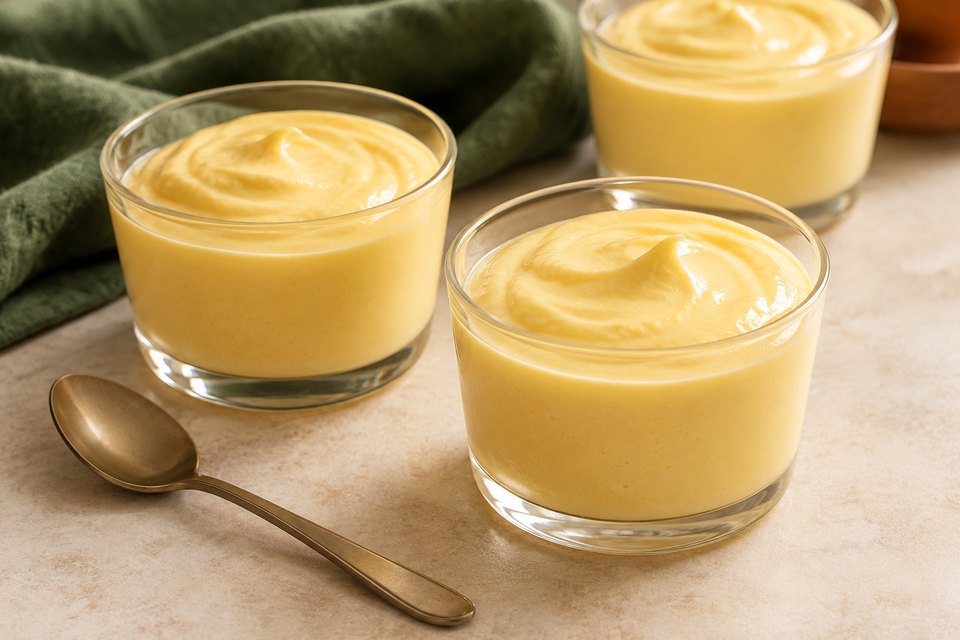
AI-generated illustration: Serving interpretation of plain passion fruit mousse without seeds, fruit or syrup toppings. Color and consistency may vary.
OpenAI · Usage terms
Image details
Original text-to-image output resized proportionally to 960×640 and JPEG-compressed; no crop or added ingredients.
The passion fruit label makes the difference
Look for an unsweetened Brazilian-style concentrate rather than a juice drink. A sweetened nectar changes both sweetness and dilution. This recipe does not supply a conversion for concentrated syrups, powdered drink mixes or industrial multi-fold concentrates.
Pasteurized is a separate check from frozen or refrigerated: those storage methods alone do not establish that juice has been treated to kill harmful bacteria. Ask the manufacturer if the label is unclear. This no-cook version intentionally leaves out fresh raw fruit and seed garnish.
Creamy and spoonable, with no gelatin
The three-ingredient blender method appears in Receitas Nestlé, while Olivia Mesquita explains a heavier-cream version and its gelatin-free option. Here the cream is measured by US volume and the longer, six-hour chill is deliberate. This is not whipped egg-white mousse and needs no raw eggs.
Use heavy whipping cream, not milk, half-and-half or canned evaporated milk. Sweetened condensed milk supplies concentrated dairy and sugar; evaporated milk cannot replace it can for can. Product dilution and cream fat content affect thickness, so do not promise a firm cake filling from this formula.
If the mousse remains loose after an overnight chill, check those labels before the next batch. You can serve a safely refrigerated soft batch as a passion fruit dessert cream. Adding more liquid fruit juice to the finished mixture will not help it hold a shape.
Make ahead, storage and allergens
Contains milk. Prepare the cups the day before serving and keep cold. The two-day plan is deliberately shorter than some recipe-site claims; Culinara has not tested this adaptation’s keeping quality.
Store covered at 40°F or below. Discard mousse that has spent more than 2 hours unrefrigerated, or 1 hour above 90°F; chilling it again does not undo unsafe holding.
Research sources
- Receitas Nestlé — Receita de Mousse de Maracujá (three ingredients) (checked 2026-10-22)
- Olivia Mesquita — Passion Fruit Mousse, Olivia’s Cuisine (checked 2026-10-22)
- Receitas Nestlé — Mousse de Maracujá Prático (storage discussion) (checked 2026-10-22)
- FDA — What You Need to Know About Juice Safety (checked 2026-10-22)
- FDA — Are You Storing Food Safely? (checked 2026-10-22)