recipe
Couve Refogada: Brazilian garlicky collard greens
Thin ribbons of collard greens quickly cooked with olive oil and garlic. Remove the tough ribs, slice finely and cook in two manageable skillet batches.
AI editorial review: 2026-10-22
Researched recipe; not cooked or tested by Culinara.
Jump to ingredients and methodPrint using your browser’s Print command.
Ingredients and method
About 4 small side servings; portion count is estimated
Ingredients
- 1 pound fresh whole collard greens (about 450 g before removing thick stems and center ribs)
- 3 tablespoons olive oil, divided
- 4 garlic cloves, finely minced and divided
- Fine salt, to taste
Method
- Wash the leaves thoroughly under cool running water, rubbing away visible dirt, then dry with a clean towel or salad spinner. Cut out the thick stalk and center rib from each leaf. Keep the flexible leaf portions for this recipe.
- Stack two or three trimmed leaves at a time and roll them tightly. Cut across the roll into very thin ribbons, aiming for about 1/16 inch, roughly 1–2 mm. Separate the strands with your fingers. Divide the greens, oil and minced garlic into two equal batches before turning on the heat.
- Heat a wide 12-inch skillet with a lid over medium heat. Add half the oil (1 1/2 tablespoons) and half the garlic. Stir just until fragrant and barely beginning to color, about 30–60 seconds. Add the first half of the greens before the garlic becomes dark brown.
- Toss with tongs to distribute the garlic oil, then cover. Cook for about 3–5 minutes, uncovering to toss occasionally, until the ribbons are wilted and tender enough to bite through but still have a little texture. If the leaves need longer, continue briefly over moderate heat and check again rather than relying on color alone. Season with a small pinch of salt and transfer to a serving dish.
- Check the empty skillet before the second batch. Remove any dark garlic fragments and lower the heat if the pan is too hot. Add the remaining oil and garlic, then cook the remaining greens in the same way. Combine both batches, taste for salt and serve promptly.
- Refrigerate leftovers promptly in a shallow covered container at 40°F or below, within 2 hours of cooking or 1 hour above 90°F. Use within 3–4 days and reheat the portion needed to 165°F throughout. The greens will soften further when reheated.
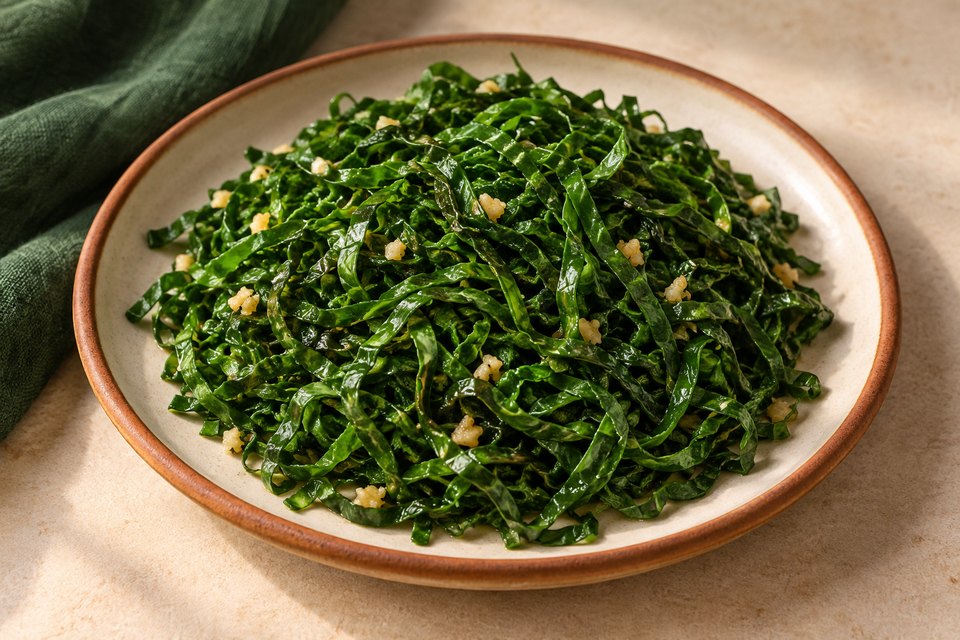
AI-generated illustration: Serving interpretation of thinly sliced collards with olive oil and minced garlic, without meat or extra garnish. Leaf width, color and degree of wilting may vary.
OpenAI · Usage terms
Image details
Original text-to-image output resized proportionally to 960×640 and JPEG-compressed; no crop or added ingredients.
The thin cut does the work
Couve refogada is a useful side for rice and black beans. This version keeps the leaves in fine strands that cook quickly, with a little bite left in them. The tough center ribs are removed because they do not soften at the same pace as the ribbons.
Use fresh collard leaves rather than a bag of roughly chopped greens containing large stem pieces. Keep the leaf stacks small enough to roll and hold securely. A sharp knife makes a narrow, even cut easier; broad strips need a different cooking time.
A bunch has no fixed weight. The one-pound shopping amount here makes the batch more predictable; weigh the whole leaves before trimming. Very thick or mature leaves may still need longer than the estimated cooking window.
Give the garlic and greens room
Olivia Mesquita’s recipe uses minced garlic that stays with the greens and a brief covered cook. Panelinha also describes very fine shredding and recommends cooking larger quantities in stages. This recipe uses two batches in a 12-inch skillet so the greens can be turned through the oil without spilling over the sides.
The garlic should smell fragrant before the greens go in, with only the beginning of golden color. Dark, scorched garlic can make the whole batch bitter. Between batches, remove burnt fragments rather than carrying them into the fresh oil.
The finished greens should be lightly glossy and easy to chew, without a pool of broth. No bacon, onion, stock or garnish is included in this version. Taste a ribbon for tenderness; green color alone does not tell you whether a thicker leaf has softened.
Fit the greens into dinner
Wash and slice the greens while rice or beans cook, then refrigerate them if you are not cooking immediately. Have the rest of dinner nearly ready before heating the skillet. The two short batches are intended to reach the table soon after cooking.
Serve beside arroz branco, feijão preto and farofa, or add them to a plate with galinhada. This is a small vegetable side; the estimated four portions are not four large bowls.
Clean preparation and leftovers
Use running water to wash whole leaves; soap and household detergent do not belong on produce. Washing reduces dirt and some contamination but does not sterilize the greens. Keep the washed leaves and serving dish away from raw meat juices.
This selected ingredient list has no added meat, dairy, egg, wheat or nuts; check packaged ingredients and preparation surfaces for your own allergy needs. Cool leftovers promptly in a shallow container and follow the refrigerated limits above. Texture is best preserved by cooking only the amount you plan to serve.
Research sources
- Olivia Mesquita — Brazilian Collard Greens Recipe, Olivia’s Cuisine (checked 2026-10-22)
- Panelinha — Couve refogada (checked 2026-10-22)
- FDA — Selecting and Serving Produce Safely (checked 2026-10-22)
- FDA — Safe Food Handling (checked 2026-10-22)
- University of Illinois Extension — Leftovers (checked 2026-10-22)