recipe
Cuscuz nordestino: Brazilian steamed corn
Plain yellow cuscuz made by hydrating flocão de milho and steaming it in a cuscuzeira. Includes the right US shopping terms, separate water measurements and texture cues.
AI editorial review: 2026-10-22
Researched recipe; not cooked or tested by Culinara.
Jump to ingredients and methodPrint using your browser’s Print command.
Ingredients and method
About 3 side or breakfast servings (estimated)
Ingredients
- 1 1/2 US cups plain flocão de milho for cuscuz nordestino, measured dry and without packing
- 1/2 teaspoon fine salt
- 3/4 US cup room-temperature water (about 180 ml) for hydrating the flakes, plus 1 tablespoon only if dry patches remain
- Additional water for the lower chamber of a cuscuzeira, following its fill instructions; this is separate from the hydration water
- 1 tablespoon unsalted butter (14 g), optional, for serving
Method
- Use a small cuscuzeira with a fitted lid and a secure perforated insert that can hold this batch without packing it tightly. Check the flocão package: this recipe needs plain corn flakes intended for northeastern Brazilian steamed cuscuz, not breakfast corn flakes or fine cornmeal.
- Mix the dry flocão with the salt in a bowl. Sprinkle in the 3/4 cup water while stirring, working through any dry pockets. Rest for 10 minutes. The flakes should be evenly damp and hold briefly when pressed, with no puddle underneath. If dry patches remain, stir in up to 1 tablespoon more water and wait another 5 minutes.
- Fill the lower chamber of the cuscuzeira according to its instructions. The water must remain below the perforated insert and provide enough steam without boiling dry. Bring it to a boil while keeping the insert off the heat.
- Gently spoon the hydrated flakes into the insert. Level the surface lightly; do not press them into a solid mass. Fit the insert over the boiling water, put on the lid and reduce the heat enough to maintain steady steam.
- Steam for about 10 minutes, counted from when steam is passing through the assembled pot. Open the lid away from your face. Check a little from the center: the cuscuz should be swollen, tender and free of hard, gritty patches. If needed, cover and steam for another 3–5 minutes. Keep water below the insert; if it needs topping up, follow the pot manufacturer’s instructions and use hot water.
- Turn off the heat. Using oven mitts and the pot’s safe lifting method, remove the insert; metal handles can be hot. Unmold onto a plate or spoon into bowls, loosening the corn gently. Add the optional butter while warm and serve.
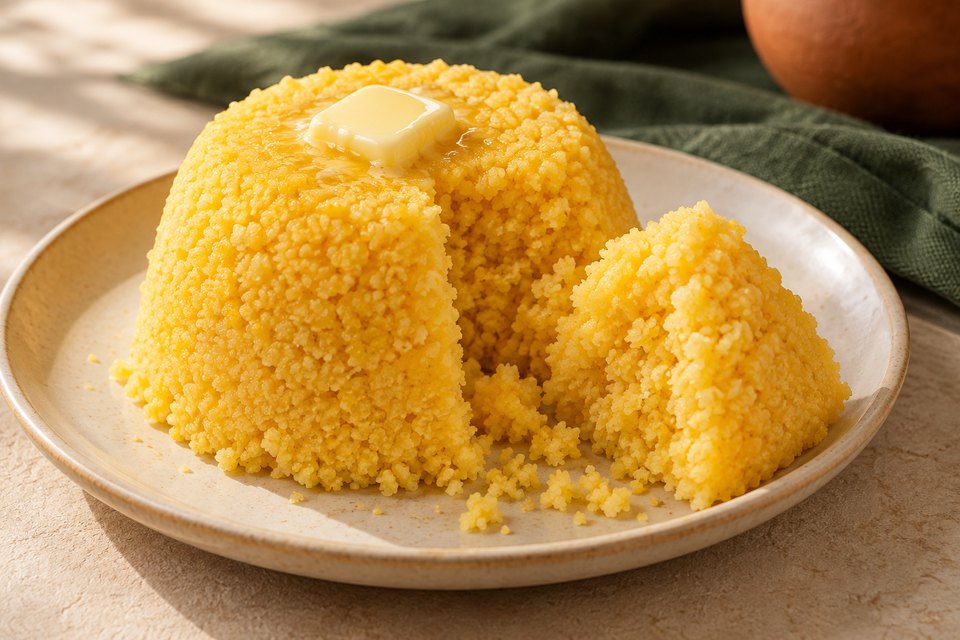
AI-generated illustration: Serving interpretation of plain steamed flocão cuscuz with the optional butter. Mold shape, grain texture and serving size may vary.
OpenAI · Usage terms
Image details
Original text-to-image output resized proportionally to 960×640 and JPEG-compressed; no crop or added ingredients.
Buy flocão, not just anything labeled corn flour
Look for flocão de milho or a package explicitly intended for cuscuz nordestino. In a US store, the English words corn flour or corn flakes can refer to very different products. The recipe needs coarse precooked corn flakes that hydrate and then steam.
Fine cornmeal, grits, polenta, masa harina and breakfast cereal are not assumed to work with this ratio. Large, brittle farinha de milho biju used for other Brazilian dishes also has a different texture. Wheat semolina couscous needs a different preparation and contains wheat; its packet method does not apply here.
Two water amounts do two different jobs
The 3/4 cup water moistens the corn before it meets the steam. Water underneath the insert supplies steam and should not touch the flakes. Combining both amounts in the bowl would turn the preparation into a different dish.
Flakes should be moist throughout before cooking, and loose enough in the basket for steam to move through them. A dry center can mean uneven hydration, a tightly packed basket or too little steam. Use the tenderness check instead of assuming every brand and steamer finishes in precisely ten minutes.
What equipment and finished texture to expect
A cuscuzeira is a stovetop corn steamer: a lower water chamber, an insert above it and a lid. US listings may call it a Brazilian couscous steamer. This method is written for that setup. A rice cooker that boils food in water and a bowl of instant wheat couscous do not use the same process.
The cooked corn can hold a gentle mold, then break into soft, moist crumbs when served. It has no baked crust. Allow around 25–35 minutes including hydration and heating the steamer; that is an estimate. Butter is optional, and a simple serving suits breakfast or a saucy main dish.
Allergens and leftovers
Butter adds milk. The plain corn, water and salt base contains no added wheat, but verify the flocão label and preparation surfaces if avoiding gluten. Do not infer an allergy guarantee from the dish name.
Promptly refrigerate cooked leftovers in a covered shallow container at 40°F or below: within two hours, or one hour above 90°F. Use within 3–4 days and reheat to 165°F. A small splash of water and a cover help restore moisture during reheating.
Research sources
- Panelinha — Cuscuz de milho para café da manhã (checked 2026-10-22)
- Geisa Araújo / Receitas Dona Julia — Cuscuz nordestino (checked 2026-10-22)
- U.S. FDA — Safe Food Handling (checked 2026-10-22)
- University of Illinois Extension — Leftovers (checked 2026-10-22)