recipe
Pão de Queijo: Brazilian Cheese Bread
Small Brazilian cheese breads made with tapioca starch, Parmesan and mozzarella. A stovetop dough with clear shopping, shaping and baking cues for a US kitchen.
AI editorial review: 2026-10-22
Researched recipe; not cooked or tested by Culinara.
Jump to ingredients and methodPrint using your browser’s Print command.
Ingredients and method
Makes 24 small cheese breads when portioned as directed (estimated)
Ingredients
- 250 g tapioca starch (about 2 US cups, spooned into the cup and leveled); also labeled tapioca flour or polvilho doce
- 1/2 US cup plus 2 tablespoons whole milk (150 ml)
- 1/4 US cup water (60 ml)
- 2 tablespoons plus 2 teaspoons neutral vegetable oil (40 ml), plus a little for your hands
- 1/4 teaspoon fine salt
- 1 large egg
- 75 g Parmesan, freshly and finely grated (about 3/4 US cup; weight is more reliable)
- 50 g low-moisture mozzarella, shredded (about 1/2 US cup); not fresh mozzarella packed in water
Method
- Heat a conventional oven to 400°F (200°C). Put a rack in the center and line a large baking sheet with oven-safe parchment. Put the tapioca starch in a large heatproof mixing bowl. Have a sturdy spoon or a stand mixer with a paddle ready.
- Bring the milk, water, oil and salt just to a full boil in a small saucepan, watching so the milk does not boil over. Immediately pour the hot liquid over the starch while stirring carefully. Work in the dry patches; the mixture will be stiff and uneven.
- Let the mixture cool until warm rather than hot, stirring occasionally. Beat the egg in a small bowl, then work it thoroughly into the dough. Mix in both cheeses until evenly distributed. A soft, tacky dough is expected; do not knead it as if it were wheat bread.
- If the dough is too sticky to portion, refrigerate it for 10–15 minutes. Lightly oil your hands and divide the dough into 24 small balls, roughly 1 1/4 inches across. Set them at least 1 inch apart on the baking sheet. Keep any dough awaiting a second batch refrigerated.
- Bake for about 20–30 minutes, checking from 20 minutes, until puffed, set on the outside and lightly golden underneath and in spots on top. Larger balls need longer. Split one after a short cooling pause: the center should be elastic and cheesy, without liquid egg or a wet, pasty pocket. Continue baking if needed.
- Let stand for about 5 minutes before eating; melted cheese can be very hot. Serve warm. Refrigerate remaining baked breads promptly, or freeze them for another day.
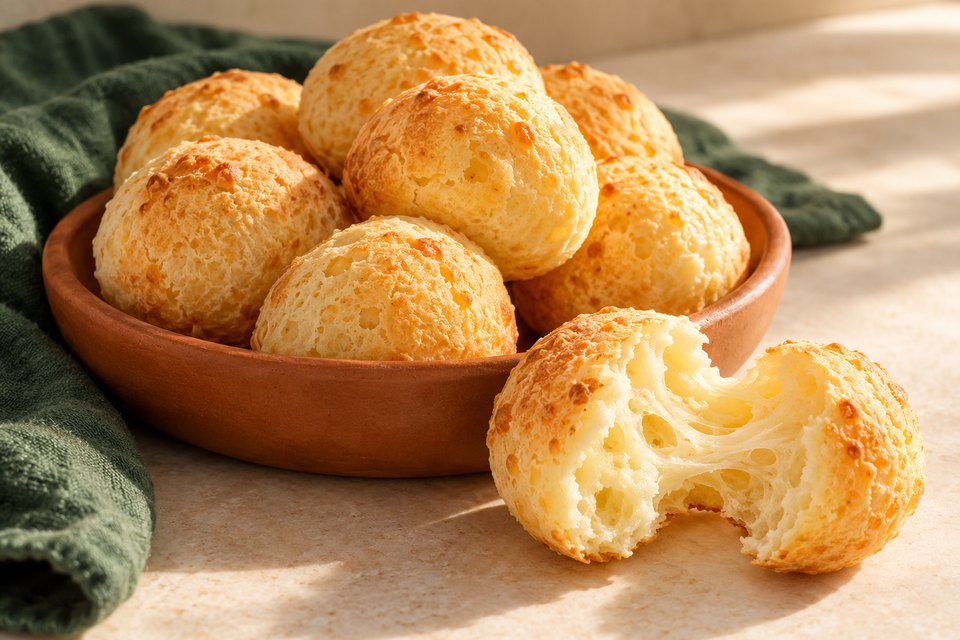
AI-generated illustration: Serving interpretation showing tapioca cheese rolls with a stretchy interior. Shape, crumb and color may vary.
OpenAI · Usage terms
Image details
Original text-to-image output resized proportionally to 960×640 and JPEG-compressed; no crop or added ingredients.
Buy starch, then choose the cheese
Use the fine white powder sold as tapioca starch or tapioca flour. Cassava flour made from the whole root, gritty farinha de mandioca, tapioca pearls and hydrated tapioca used for skillet crepes behave differently. This formula uses sweet starch throughout; swapping some for fermented polvilho azedo changes the puff and texture.
Brazilian recipes often use queijo meia-cura and may combine sweet and sour starch. Here Parmesan brings concentrated cheese flavor while low-moisture mozzarella supplies a softer melt. The weighed cheese amounts avoid the large variation between loosely shredded and tightly packed cups.
What to expect from the dough
The boiling liquid hydrates the starch before the egg and cheese go in. Cooling that first mixture protects the egg from scrambling. Stickiness alone is not a reason to keep adding starch: a brief chill and lightly oiled hands make portioning easier without changing the formula.
Plan on roughly 50–65 minutes including cooling the dough and baking. The 24-piece yield is a portioning target, and timing is an estimate for this smaller batch. Culinara has not cooked this version.
Allergens and keeping a batch
Contains milk and egg. No wheat flour is added, but check ingredient labels and preparation surfaces if avoiding gluten. Egg-free or dairy-free replacements need a different formula.
Refrigerate leftovers at 40°F or below within two hours, or within one hour above 90°F. Use refrigerated breads within 3–4 days; reheat to 165°F. The crust softens in storage. For a future freshly baked batch, freeze shaped raw balls on a tray, bag when firm and bake from frozen, allowing extra time.
Research sources
- Panelinha — Pão de queijo (checked 2026-10-22)
- Olivia Mesquita — Pão de Queijo, Olivia’s Cuisine (checked 2026-10-22)
- U.S. FDA — Safe Food Handling (checked 2026-10-22)
- University of Illinois Extension — Leftovers (checked 2026-10-22)